In the last two centuries fashion has moved in a 20-year trend cycle. What is considered to be popular now can typically be traced back to some trend from 20 years prior, and while this cycle has started to speed up (see Accelerationism in Fashion), it’s still a generally accepted rule in the industry. Though this number may seem random or made up, I believe this can be explained by two of Sigmund Freud’s theories: the theory of sexual development, and the theory of personality.
Within fashion there are two types of trends, macro and micro. Macrotrends (as the name suggests) are large-scale, less focused on specifics and are more of a broad idea, an example being the “Y2K” trend, or the revival of the early 2000’s style of lowrise jeans, “baby tees”, mini shorts and many other things we’ve seen resurge over the past 2-3 years . Macrotrend usually lasts five-to-10 years and will contain many microtrends during it . Microtrends, on the other hand, are more specific and usually tie into the overarching macrotrends of the time. Microtrends are specific items, styles, and brands. Microtrends fit into the current macrotrend. But, because of the specificity, they become oversaturated and thus, die out faster, lasting only three-to-five years. Examples being Miu Miu’s “Micro-Mini Skirt”, Margiela’s tabi ballet flats, or the color hot pink. These examples of microtrends all exist within the larger macrotrend of Y2K as they were all items that were trendy or based on items that were trendy during the early 2000’s.
The life of a trend plays out in five stages: First, a trend is introduced or reintroduced by a small group of “innovators.” Its popularity begins to rise amongst trend chases and “cool kids” known as “early adopters.” When a trend has reached peak popularity, its participants are called the “early majority,” but as the trend becomes oversaturated, it begins to decrease in popularity, and only the “late majority” sticks to it. Finally, the trend is practically dead, and the “laggards” begin to participate in it. These stages can be applied to both microtrends and the larger, domineering macrotrends; they can be subject to a resurgence because of the 20-year trend cycle. There are two prominent theories on why fashion trends in this 20-year cycle. The first argues that when people reach maturity and thus can fully express themselves through clothing, they revert back to their childhood, dressing in the fashion of the time, as a way of imitating the celebrities which the looked up to and crushed on in their youth. The second,similar to the first, argues that once one reaches maturity, they also revert back to childhood, but imitate their parents (in a somewhat oedipal manner) rather than celebrities. In both theories, once a child reaches adulthood and have the potential to express themselves through fashion, they end up consciously or unconsciously reverting back to the fashions of their youth.
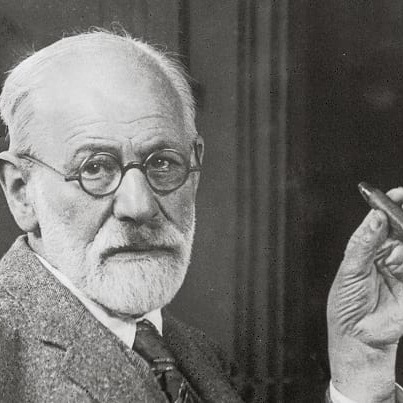
In the early 20th century Sigmund Frued, an Austrian neurologist, was making waves in the academic and science fields for his practice of psychoanalysis, a method of explaining behavior and mental conditions through the interactions of the conscious and unconscious mind. His theory of sexual development and of sexual perversions were and still are considered very controversial, as they oppose the common explanation of one’s sexual development and development of kinks. Most psychologists believe that development is deductive; people are born a blank slate, and kinks are developed around early pubescent sexual experiences. But, in typical Freud fashion, his explanation is much stranger. Instead saying that perversions are developed in puberty, Freud argues perversions are in fact developed during the first years of one’s life. He also argues a reductive development in which people are born with all sexualities and perversions already existing within themselves, and then through societal conditioning and shaming, most are lost.
This shaming and conditioning comes both from specific people within the child’s life and society with which he is surrounded; media, laws, unwritten social codes all dictate what is right and wrong for the child. Freud believed that sexual development comes in five stages: the oral, the anal, the phallic, the latent, and the genital, where the majority of sexual development occurs in the phallic stage, between the ages of three and six years old. This stage also sees the formation of Freud’s infamous Oedipus Complex, named after Sophocles’s story Oedipus Rex, where Laius, the king of Thebes, was told a prophecy by an oracle, that his son, Oedipus would kill him. To prevent this from happening, Laius told his wife, Jocastato, to kill Oedipus, but she could not, and instead abandoned him to the elements where he was found and raised as his own by the Polybus, the king of Corinth. After growing up, Oedipus talked to an oracle who said that he would kill his father (whom he thought was Polybus) and marry his mother. Upon hearing this Oedipus left Corinth to ensure this did not happen. After leaving Corinth he encountered a man (Laius, his real father), and argued with him, which led to Oedipus killing Laius. Later he came across a sphinx who had placed a curse upon Thebes. The sphinx had three riddles, after Oedipus solved them, the kingdom rewarded him with the hand of Jocasta (his mother), and the crown of Thebes. This, unbeknownst to Oedipus, fulfilled the prophecy.
Freud’s Oedipus complex describes a phenomenon wherein children (particularly boys) develop a covert desire for their parent of the opposite sex, and a resentment of their parent of the same sex. Freud stated that the development of the Oedipus Complex is due to “conflict” in the phallic stage. The desire for one’s opposite sex parent is more than just a sexual desire; one becomes obsessed with the parent, their hobbies, their job, their lifestyle, and most importantly, their wardrobe.
In his 1923 book, The Ego And The Id, Freud breaks up the contributors to one’s personality into three elements, and compares personality to an iceberg; the part above water is the conscious elements of one’s personality, and the part below is the unconscious elements. Below the water, in the unconscious, we have the first element, the “id,” or the “unconscious,” a human’s instinctive, biological personality components which are inherited, and thus are present at birth. These include needs such as food and water, but also pleasure and desire. The id responds to what Freud calls the “pleasure principle,” a psychic force that seeks immediate and constant gratification. The second element is the “ego,” or the conscious, the rational part of one’s personality. This element is the primary decision maker, as the ego is formed in reaction to the world around it, through things like social norms, laws, or etiquette. The ego, like the id, seeks pleasure and desire, but in a more realistic approach. These two elements are often contradictory to each other, and are mediated by the third element, the “super-ego”, which is part conscious and part unconscious. The super-ego is the moralistic and emotional part of one’s personality,attempting to find a sort of middle ground between the id’s instant gratification and the ego’s rationality, working to achieve long-term pleasure and one’s “best self.”
These two theories, while not intentionally pertaining to fashion, can be applied to the question of how trends are formed. As previously stated, macro trends usually resurge in 20-year cycles. When looking at the trend cycle with the framework of Freud’s theory of sexual development, fashion preferences (like deviances) are morphed through one’s childhood as a result of social conditioning. When a child is born, they are indifferent to clothes, and through development, they hear and see trends, and even more importantly, hear and see what is not trendy. This conditioning is passed on through cultural objects of desire such as celebrities, or through Oedipal objects of desire, such as parents.
So, affections towards certain items and styles, like deviances, are lost throughout one’s development. When a child grows up and is old enough to express themselves through fashion, they naturally revert back to their childhood and what was not cool then, recreating and thus resurging the trends of 18-to-20 years prior, restarting the cycle. Freud’s theory of personality can be used to explain variance within trends, and the way individuals operate within a trend. The id, seeking immediate gratification, wants to constantly stay on-trend, hopping from trend to trend, in search of the immediate pleasure of being “trendy.” The ego, or the rational component, knows that being constantly on trend is too expensive and that overconsumption is bad. It knows the dangers of promiscuity or expression, it knows that certain trends are not possible in some areas of the world (i.e., puffer jackets in the desert), and it knows the environmental impacts of fashion.
The super-ego is responsible for the variation within trends from person to person, as one’s personality defines how they interact and express themselves with trends. The super-ego decides if someone is more conservative or risqué, traditional or fashion-forward, timeless, trendy, minimalist or extravagant. Using these two theories as our basis, the 20-year cycle can be understood as subconscious conditioning beginning during early childhood development, and with one uses one’s personal interaction with these trends being dictated by the ego and the id’s constant conflict and one’s remaining subconscious deviances.
Since Freud’s passing, his theories maintained their high levels of controversy and have continued to receive criticism. Among these criticisms, one of the most popular of these criticisms originates from Gilles Deleuze and Felix Guattari’s Anti-Oedipus, a book I reference a lot in my writing. Anti-Oedipus critiques Freud, Lacan and other psychoanalysts, arguing that they are too focused on the individual, neglecting the systems in place, especially capitalism. Fashion, like any other industry, is obviously affected by capitalism. Fashion is governed by and subjected to what one can afford, what trends are being pushed by brands trying to maximize profit, and in about a billion other ways. However, fashion, unlike other industries, is much more individualistic in nature, as it concerns how one expresses themselves and, as such, Freud’s theories and frameworks of thinking are applicable to fashion and why individuals and generations dress the way they do.
Work Cited
4inquiries. “Freud on Fetishism.” Psychoanalysts, 19 Feb. 2013, https://psychoanalysts.livejournal.com/29943.html.
Borecka, Natalia. “The Conformity Paradox: Kierkegaard and Freud on Individuality, Fashion and Consumerism.” Lone Wolf Magazine, 9 Mar. 2021, https://lonewolfmag.com/conformity-paradox-fashion/.
Cassata, Cathy. “Sexual Fetishes: What Causes Them?” Healthline, Healthline Media, 16 Oct. 2019, https://www.healthline.com/health-news/what-causes-sexual-fetishes.
Cherry, Kendra. “The Oedipus Complex: One of Freud’s Most Controversial Ideas.” Verywell Mind, Verywell Mind, 20 May 2022, https://www.verywellmind.com/what-is-an-oedipal-complex-2795403.
Cherry, Kendra. “What Are Freud’s Stages of Psychosexual Development?” Verywell Mind, Verywell Mind, 27 July 2022, https://www.verywellmind.com/freuds-stages-of-psychosexual-development-2795962.
Cherry, Kendra. “What Are Freud’s Stages of Psychosexual Development?” Verywell Mind, Verywell Mind, 27 July 2022, https://www.verywellmind.com/freuds-stages-of-psychosexual-development-2795962.
Deleuze, Gilles, and Felix Deleuze. Anti-Oedipis. Vol. 1, Minnesota Press, 972AD.
Freud, Sigmund. Fetishism. Self-Published, 1927.
Freud, Sigmund. The Ego and The ID. Internationaler Psycho- International Psychoanalytical Association, 1923.
Freud, Sigmund. Three Essays on The Theory of Sexuality. Martino Fine Books, 1905.
Gillette, Hope. “Oedipus Complex: What Is It and How Is It Addressed?” Psych Central, Psych Central, 14 Oct. 2021, https://psychcentral.com/health/oedipus-complex#causes.
Hoffman, Leon. “Freud Theories About Sex Are As Relevant As Ever.” PsychNews, 5 Aug. 2005, https://psychnews.psychiatryonline.org/doi/full/10.1176/pn.40.15.00400018.
Horikawa, Maya. “S. Freud: How to Dress Me, Myself, and I.” Talk Fashion, 24 Aug. 2017, http://mayahorikawa.blogspot.com/2017/08/s-freud-dress-me-myself-and-i.html.
Jay, Martin Evan. “Sexuality and Development.” Encyclopædia Britannica, Encyclopædia Britannica, Inc., https://www.britannica.com/biography/Sigmund-Freud/Sexuality-and-development.
Lopez, Carmen. “Why Do Fashion Trends Come Back?” Current Boutique, https://currentboutique.com/blogs/cravingcurrent/why-do-fashion-trends-come-back.
Mcleod, Saul. “Freud’s Id, Ego, and Superego.” Id, Ego, & Superego | Freud & Examples – Simply Psychology, 2021, https://www.simplypsychology.org/psyche.html.
Seely, Stephen D. “How Do You Dress a Body Without Organs? Affective Fashion and Nonhuman Becoming.” JSTOR, https://www.jstor.org/stable/23611788.
Stambaugh, Russell J. “#AASECT16–Consent 201: Consent and Its Discontents.” Elephant In The Hot Tub, 11 July 2019, https://elephantinthehottub.com/2016/06/aasect16-consent-201-consent-and-its-discontents.
Toussaint, Lianne, and Anneke Smelik. “Memory and Materiality in Hussein Chalayan’s Techno-Fashion.” OAPEN Home, Taylor & Francis, 2 Feb. 2021, https://library.oapen.org/handle/20.500.12657/46477.
 Digital Lobotomy
One response to “Fashion Kinks”
eat it hoe
LikeLike