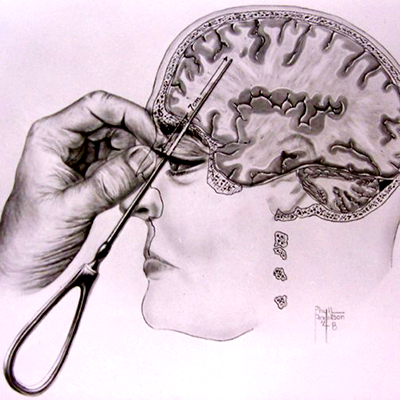

In this atomized age, the strive for simplicity can be seen through the adoption of neo-traditionality, which is visible in many unconnected aspects of popular culture. Fashion trends like cottage or Catholic core, lifestyle trends like traditional diets, homesteading, or embracing religion—by grasping at these straws, one may just be able to find a sliver of peace during our days of judgment.
The fashion trend landscape now exploded into a million core-fixed slivers and is no longer defined by one unanimous aesthetic but is instead divided into micro-aesthetic style tribes. Appearing as fast as they disappear, it’s often not worth writing about any in particular as by the time I could finish a paper about the “Tomato Girl,” it’d already be over. However, the persistence of trends like cottage core, coquette, and similar antiquarian styles in the ever-rotating doors of TikTok micro-trends is telling. Cottage core is a lifestyle and fashion trend characterized by its floral prairie dresses, maxi skirts, puffed sleeves, blouses, and woven straw anything. The lifestyle and ideological aspects include self-reliance through activities like baking bread or brewing mead (this is likely a leftover of various time-passing quarantine projects), semi-Luddite sentiment, and a deeper connection to nature through gardening and foraging. Coquette, which feels like an evolution of cottage-core, looks similar but with a muted, primarily white and pink color scheme, covered in lace, frills, and, most importantly, bows on everything. In the current fashion landscape, coquette stands out from other micro-trends as it is both hyper-feminine and hyper-traditional. Another interesting aspect of these trends is the materials used in the garments. Once again, in contradiction to the rest of the fashion industry, there is an emphasis on natural fibers like cotton, linen, hemp, silk, straw, and leather. Not only are these material periods correct, but they’re a return to traditional construction and a revolt against our contemporary post-modern-micro-plastic-infested age.
Similarly, this sentiment is visible through the increased popularity of artisanal brands like Guidi, Carol Christian-Poell, Geoffrey B. Small, Richard Alexander Cooke, John Alexander Skeleton, and Elena Dawson. These brands focus on small-batch garments mimicking styles and construction of centuries past; the consumers of these brands easily stand out from the crowd, looking as if they’ve just time-traveled. The antiquated, meticulous construction of garments is both a rejection by the consumer and producer of our modern instantaneous gratification economy of cheaply made fast fashion. When buying from one of these brands, customers are not buying for a trend cycle but for a lifetime, as our not-so-distant ancestors once did, who did not have the “luxury” of buying clothes to look cool and fit in.
Writing this in the midst of the Fall/Winter 2024 Fashion Week, these ideologies are front and center in many of this season’s biggest shows. Maison Margiela’s 2024 couture show full of corsetry, padding, and lace. Long-time creative director John Galliano stated his inspiration came from the works of Brassaï, a French-Hungarian photographer and sculptor whose work heavily focused on the Paris nightlife underbelly during the 20s and 30s. This collection is a camp recreation of post-Victorian French fashion that holds this same fatigue of future. Following her show full of southern-belle garments, Elena Velez hosted a reading of Gone with the Wind by Margaret Mitchell, read by Jack Mason of the Perfume Nationalist podcast and Anna Khachiyan of the Red Scare podcast, two podcasts which have been scrutinized for their anti-PC and sometimes trad views.
Adopting these historical fashions can be seen as a route of escapism from modernity. In his 1976 essay “Lumbar Though,” Umberto Eco described a phenomenon he called Embodiment wherein an individual subconsciously exhibits traits they associate with wearers of a specific garment or style. Someone wearing military clothes may act more aggressively (read Aesthetics of Aggression), or someone dressed as a hippy may exude more peace and love. By dressing in these styles, individuals embody these times and their ideologies, which may just give them a brief moment of clarity.
As science has tried to explain all the mystical aspects of our existence once chalked up to acts of god(s) through equally incomprehensible methods, the use of faith to explain the unexplainable has dwindled. But, as with anything else, as something becomes commonly accepted, people will naturally do the opposite as rebellion. This can be seen in fashion trends like catholic core or the southern gothic. The core aspect of both trends being faith, specifically Catholicism, with heavy uses of crosses and baptismal gowns. The sentiment behind trends can be explained best through a quote by Dwayne Carter Jr, AKA Lil Wayne: “What’s a world without enigma?” These trends come as a rejection of the sterile, explained enigma-less world created by science, instead choosing the mystical. Musicians like Ethel Cain and Reverend Kristen Micheal Hayter too have utilized Southern Gothic aesthetics and Catholic themes in their music and visuals, making their work feel more akin to Flannery O’Connor or William Faulkner novels than traditional alternative folk. Reverend Kristen Micheal Hayter, on her debut album, speaks in tongue, a practice meant to channel the voice of god. Beyond Catholicism, a rebellious mystical embrace can be seen globally; underground artists like Elusin and Salem embrace heritage through aesthetics. Elusin, a Norwegian-American witch-house artist, imbues Nordic paganism with her sonic and visual aesthetics, creating transcendental occult soundscapes.
No genre better displays the idea of neo-traditionalism in music than the 80’s post-industrial subgenre of Neofolk. Neofolk is a genre that blends European folk music with industrial and post-punk elements with themes of mysticism, occultism, and historical tradition. Birthed out of post-punk and industrial music, bands like Death in June and Current 93 make music that feels like you’re at a dark-age black sabbath. Though this genre was never popular due to the many controversies of its founding members, it held a consistent die-hard anti-modernist fanbase throughout the decades. In the past three years, this genre has exploded in popularity; Current 93’s monthly listeners have increased from 36,000 in December 2020 to 228,000 in January 2024. Similarly, Death in June grew from 183,000 monthly listeners to 368,000 during the same period.
Not to beat a dead horse I’ve already beaten many times, but modern life is not as easy as it once was, blah blah blah lousy economy, blah blah blah housing crisis. While global, this seemingly endless list of difficulties is heightened in metropolitan areas. As the grindset hustle culture has infected the minds of the unwashed masses, cities like New York City and San Francisco with large corporate populations have become catoptromantic mirrors into our future. Rampant homelessness, grotesque wealth disparity, gentrification, and faster-paced, chaotic lifestyles. This, paired with growing technological and governmental resentment, has led many professionals to flee to rural areas (a phenomenon I wrote about in my paper Taking The Ted Pill) for a chance to catch their breath, made possible with advancements in remote work. The number of farms in the United States has been steadily declining for years as it’s become cheaper to import produce from other countries; however, post-pandemic, there has been a wave of corporate workers turned homesteaders. In a 2016 paper on modern homesteaders, Jordan Radke interviews homesteaders, asking them about their previous lives and motivations for such a drastic lifestyle change. Many of these participants came from the corporate world but grew discontent with their lives, feeling they were unethical, unfulfilling, and stressful. Many also displayed discontent with bureaucracy and/or governmental encroachment, wanting to live simpler lives.
With this wave of self-reliance and resistance to modern culture comes social media trends, obviously. Homesteading content has always been a staple on platforms like YouTube or even on television, with shows like Survivor Alaska. Recently, homesteading and adjacent content have flourished. The most explosive of these homesteading adjacent content is tradwife or SAHG (Stay-at-home-girlfriend) content. Short for traditional wife, the term originates from 4chan to describe a woman who fulfills traditional wifely duties, such as cooking, cleaning, caring for the children, etc. Though it originally started as a (mostly fictitious) object of desire for the chronically online alt-right, in the years since it has been adopted and used by people and groups from all across the online political landscape. Throughout the 2020s, its growth continued, but in the last two years, it has grown 1000% in popularity, becoming one of TikTok’s more persistent trends. #tradwife content shows the glamorized lives of these trade wives, often with voiceovers describing their appreciation of their husbands and their forsaking of modern feminism.
A less extreme way this can be seen is through the popularity of urban semi-self-reliance through at-home projects like fermenting, baking pantry staples, brewing alcohol, growing herbs, and produce, foregoing the convenience of our food system to have greater connections to the food we eat. What started as projects to pass the time during quarantine is now being used to combat inflation and our less-than-perfect food system, all while getting better-tasting food.
In effort to gain a better connection to their food and health, there has been a surge of dietary trends like paleo and “ancestral eating” which reject modern eating habits and look to the past as a way to solve modern health problems. Paleo, short for Paleolithic, is a diet that Loren Cordain popularized in his 2002 book The Paleo Diet, where he argues that the healthiest way for modern humans to eat is based on the diets of early humans. The paleo diet focuses on fruits, vegetables, lean meats, fish, eggs, nuts, seeds, and natural oils derived from fruits and nuts; it discourages grains, dairy, legumes, refined sugars, starchy vegetables, and, most importantly, processed foods. Ancestral eating is similar to Paleo with its avoidance of processed foods and focus on whole foods but takes it a step further with regionality. Ancestral eating argues that people should eat according to their cultural heritage. The argument for this is that generations of one’s lineage have eaten the same way for centuries, so generations’ bodies have adapted to these regional diets, and the modern deviation and the globalization of food have caused an imbalance that is the root of a lot of contemporary health problems. These two dietary trends, though different, have the same core values of mimicking how previous generations ate and rejecting the convenience of our globalized, profit-driven food system.
The culmination of these desires, habits, aesthetics, and ideologies is part of an even larger neotraditional mindset many millennials and zoomers hold. The conveniences of the Kali Yuga have proven poisonous; poisonous to our attention, poisonous to our bodies, poisonous to our minds, poisonous to our beauty, and poisonous to our world. Gone are the days of 360-degree political correctness; we’ve now reached the “post-woke” age. I have not been asked my pronouns in months, no one’s talking at me about how we’re on stolen native land again, runways have rid body positivity, and everyone’s saying retard again. In my own life, I’ve noticed a similar shedding of old skin. I can’t help but get annoyed by people spouting on in class about issues that, ostensibly, I agree with them on. The idea of sitting down and reading Marx or Lenin now nauseates me. Maybe metropolitan life isn’t for me, maybe I’ve taken being ironic and a shock-jockey too far, or maybe my parents were right, and I did just get more conservative with age.
Works Cited
Bienasz, Gabrielle. “Pandemic, Inflation Sparks Some to Be ‘Homesteaders’ and ‘Preppers.’” Business Insider, 16 April 2022, https://www.businessinsider.com/what-is-homesteading-and-prepping-inflation-food-prices-rising-2022-4. Accessed 3 January 2024.
Burke, Claire. “Ancestral eating: How to eat like your ancestors, why you should.” The House of Wellness, 22 March 2022, https://www.houseofwellness.com.au/health/nutrition/ancestral-eating. Accessed 7 January 2024.
Campion, Kristy, et al. “Far-right ‘tradwives’ see feminism as evil. Their lifestyles push back against ‘the lie of equality.’” The Conversation, 20 December 2023, https://theconversation.com/far-right-tradwives-see-feminism-as-evil-their-lifestyles-push-back-against-the-lie-of-equality-219000. Accessed 23 January 2024.
Challa HJ, Bandlamudi M<, et al. “Paleolithic Diet – StatPearls.” NCBI, 4 July 2023, https://www.ncbi.nlm.nih.gov/books/NBK482457/. Accessed 8 January 2024.
“Curandera.” Fashion SNopes, 22 December 2023, https://www-fashionsnoops-com.libproxy.fitsuny.edu/reportlayerpage.aspx?nServiceID=56&nTopID=205&nItemID=61898&nSeasonID=118&sViewedFrom=&ReportCategoryID=. Accessed 29 December 2023.
“Current 93 Monthly Listener Analytics.” SongStats, 30 October 2023, https://songstats.com/artist/v6arh3j2/current-93. Accessed 29 December 2023.
“Death in June Monthly Listner Analytics.” SongStats, 30 October 2023, https://songstats.com/artist/j054rim1/death-in-june. Accessed 29 December 2023.
Diab, Khaled. “The Shifting Cultural Role of Clothes.” New Lines Magazine, 25 March 2022, https://newlinesmag.com/argument/the-shifting-cultural-role-of-clothes/. Accessed 29 December 2023.
Eco, Umberto. Lumbar Thought. 1976.
“8 Cottagecore Essentials to Add to Your Wardrobe – Dressbarn.” Dress Barn, 22 June 2021, https://dressbarn.com/blogs/blog-1/8-cottagecore-wardrobe-essentials. Accessed 29 December 2023.
Gagnon, Cassandra. “Kitchen S/S 25.” WGSN, 11 August 2023, https://www.wgsn.com/interiors/article/64c04395943a72e19ebf4cdb. Accessed 29 December 2023.
Klabuhn, Eva. “Decorative Accessories S/S 25: Restorative Realms.” WGSN, 24 July 2023, https://www.wgsn.com/interiors/article/6478b606b169eb999182d670. Accessed 29 December 2023.
Moody, Chris. “Forget Uber Eats. Modern-day homesteaders prefer to live off the land.” The Washington Post, 10 May 2023, https://www.washingtonpost.com/home/2023/05/10/homesteaders-live-off-land/. Accessed 3 January 2024.
Napoli, Cassandra. “AI Futures: A Post-Truth Era.” WGSN, 15 May 2021, https://www.wgsn.com/insight/article/643763cabaa7bdc1871a12a6. Accessed 29 December 2023.
Pandey, Erica. “Religion is becoming less popular around the world.” Axios, 6 October 2023, https://www.axios.com/2023/10/06/organized-religion-decline-agnostic-atheist-nonreligious#. Accessed 29 December 2023.
“Pattern & Graphic Shift: Mythos⠀.” Fashion Snoopes, 22 December 2023, https://www-fashionsnoops-com.libproxy.fitsuny.edu/reportlayerpage.aspx?nServiceID=1&nTopID=258&nItemID=61872&nSeasonID=118&sViewedFrom=&ReportCategoryID=. Accessed 29 December 2023.
Radke, Jordan. “Opting Out: Efficacy, Identity, and Ideology in the Modern Homesteading Movement.” Carolina Digital Repository, December 2016, https://cdr.lib.unc.edu/concern/dissertations/td96k358c. Accessed 3 January 2024.
Rees, Allyson. “Cost of Living: Sustainable Behaviors.” WGSN, 5 September 2023, https://www.wgsn.com/insight/article/64e53884bbe285af6865eb81. Accessed 29 December 2023.
Reggev, Kate. “What Exactly Is Cottagecore and How Did It Get So Popular?” Architectural Digest, 21 October 2020, https://www.architecturaldigest.com/story/what-exactly-is-cottagecore. Accessed 29 December 2023.
Ringo, Angela, and Cassandra Gagnon. “Stationary S/S 25: Restorative Realms.” WGSN, 22 August 2023, https://www.wgsn.com/interiors/article/64cd3b46f01b130be5b9b994. Accessed 29 December 2023.
Samba, Urangoo. “Advanced Color 2028.” WGSN, 23 September 2023, https://www.wgsn.com/fashion/article/64a42928bc74e2b665646082. Accessed 29 December 2023.
Wresilo, Victoria. “People Growing Their Own Food As Inflation Continues.” Spectrum News, 8 April 2022, https://spectrumlocalnews.com/nc/charlotte/news/2022/04/08/more-people-learning-to-grow-their-own-food-as-inflation-continues. Accessed 7 January 2024.
Yalcinkaya, Günseli. “Tradwives are levelling up.” Dazed, 12 March 2024, https://www.dazeddigital.com/life-culture/article/62099/1/trad-wives-are-lvling-up-nara-smith. Accessed 17 March 2024.
 Digital Lobotomy